RHODESIANA.
Publication No. 25 — December, 1971.
THE RHODESIANA SOCIETY, Salisbury,
Rhodesia.
By J. G. Storry.
Africa abounds with stories of white men "going native". The earliest ac- counts seem to be of enforced habitation with indigenous tribes, owing to some misfortune that has separated a man from his fellows. Perhaps the best example is that of sailors round the shores of southern Africa shipwrecked on the inhos- pitable rocks of the Wild Coast and thereafter, rescue being largely out of the question, settling among the tribes of Pondoland.
It should, therefore, come as no surprise that no sooner did Europeans make contact with the tribes of the interior than one or other of their number would find himself a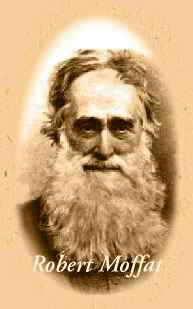 mongst them for good.
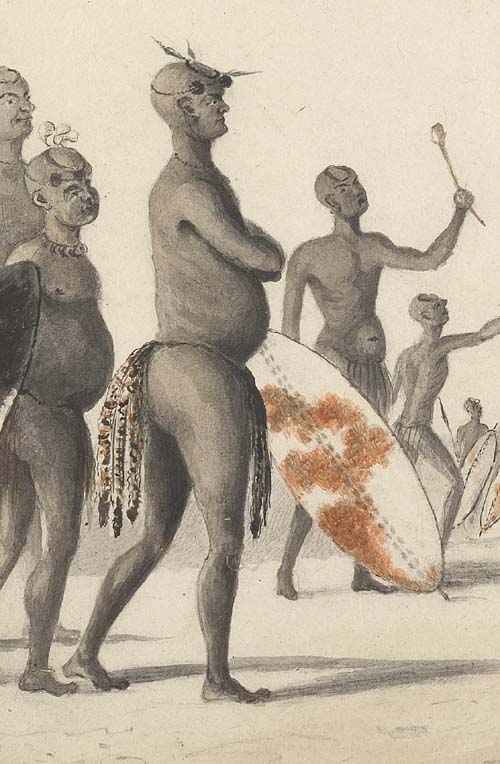
The first Europeans to visit Mzilikazi, paramount chief of the Matabele, were two traders, Schoon and McLuchie, in 1829. They were shortly followed by Robert Moffat, the missionary from Kuruman, to the south. Mzilikazi agreed with Moffat that travellers to his domains via Kuruman would be treated with respect but, because he had had trouble with roving bands of Griqua hunters raiding his cattle posts, adventurers and others journeying by any other route would be considered enemies of the Matabele and killed. The chief kept his word and several parties, including Captain W. Cornwallis Harris, were received with courtesy, owing to their abiding by the agreement and arming themselves with a safe conduct from Kuruman. Equally, those entering Matabele territory from across the Vaal or Orange rivers were open to sudden and murderous attack by patrolling impis, always on guard along the southern border. It was, of course, at about this period that families of Boers sought to escape the bureaucratic hand of a British-governed Cape Colony and one way of so doing was to pack their belongings into ox-waggons and set out for the unknown north. The extent of geographical influence, and quite often the very presence, of Mzilikazi and his Matabele was unknown and several parties of trekkers lumbered along in an almost suicidal manner, heedless of the watching warriors.
The first captives were "Truey" (Gertrude), the daughter of Peter Davids, and her cousin, Wilhelm, both Griquas and children of members of a hunting party that fell foul of the Matabele in 1833. Truey was rescued by Moffat some years later.
The activities of the trekkers increased in the middle thirties and, in August 1836, a Mr. Stephanus P. Erasmus collected together a party, consisting of several families, to hunt elephant, north of the Vaal. The expedition, though a large one, made up of five waggons, 80 oxen and about 50 horses, was not very successful. They were attacked as they were on their way home, at the beginning of September. The Matabele surrounded the camp just as Erasmus and one of his sons reached it in the evening. Another son and Carel Kruger had been surprised earlier, while out hunting, and killed. Two more members of the party, Piet Bekker and his son, were chased by the warriors but managed to escape. Erasmus rode for help and to warn other hunting parties in the area. He managed to get 11 men to return with him but a second impi spotted them and they raced for the safety of their laager, which was promptly attacked. The attack was unsuccessful and the Matabele, after a fight lasting six hours, withdrew.
The first impi Erasmus encountered had more success. Having killed every- one they found in his camp they moved up-river and came upon the laager of the Liebenberg family, headed by old Barend Liebenberg with his children and grandchildren. The warriors fell ferociously upon the waggons, broke through and massacred the defenders. They then left, taking with them three children (two girls and a boy) and the wagons. When, a week later, Erasmus returned to the spot all he found were the bodies of five of his servants.
The names of the captured children are not known and the only clue lies in the names Liebenberg, Dutoit, his son-in-law, and MacDonald, a friend, whose families made up the party. Neither is the fate of the girls known, although Posselt calls one of them Sarah and suggests that she assumed the protective role of elder sister to Lobengula and died of snake-bite in the Matopos in about 1845.
If the children were allowed to live it seems likely that, following the plight of most Matabele captives, they would be allotted as slaves to some induna and would grow up as members of their master's household. It was Matabele policy to swell the ranks of the tribe by integrating into its society the people they conquered and the captives taken in raids or battle. So far was this deliberate policy carried on that when the tribe finally settled in Rhodesia it consisted of three distinct social classes—the Abezansi, from Zululand; the Abenhla, from the Transvaal and Orange Free State; and the Amaholi, the lowest class, made up of captives taken in Rhodesia from amongst the Mashona. If the children were treated in this manner they would do the usual chores of all kraal children. The girls were restricted to domestic duties around their masters' huts, eventually helping to cultivate crops and finally being married off to warriors in a regiment about to don the isidhlodhlo: their master being entitled to receive the lobola paid for them.
Harris related that the day before his arrival at eGabeni the two girls had been taken to a northern kraal, out of his way; so at least Mzilikazi seems to have intended to keep them alive. Oddly enough Harris makes no mention of the boy, but as he received the above information from Truey, whose cousin had accompanied the girls, it might be that she thought it more than her life was worth to mention him. Mzilikazi pretended to Harris that his warriors had killed the Liebenberg party in mistake for Griquas, and the thought of reprisals by the Boers must have been uppermost in the minds of many of the Matabele at the time.
In view of the Matabele attitude towards their captives there is really no reason why the boy should not have lived. A later record (Campbell) suggests that he did and that his name was uVelani—colloquially translated as "see what has come forth"—an allusion, no doubt, to the fact that he was kidnapped from a closed laager of waggons.
The pattern of uVelani's life would not differ much from that of his Mata- bele contemporaries. If captured young enough he would first herd goats before progressing to the task of cattle herding. As a lad in his teens he would become a carrier in the army, accompanying an impi, looking after his master's baggage and herding the slaughter oxen usually taken on an expedition. When he was 18 or so uVelani became a warrior in a newly-formed regiment or company.
It may be imagined that on capture the child was alternatively tearful and, maybe, defiant. His had been the childhood of a member of a sturdy, religious family; fearing no man and particularly no African. Now, he found himself thrust into the company of Matabele family life, with no possibility of escape. The fact that he did integrate so thoroughly suggests, perhaps, that he was quite young when abducted and the memory of his early life faded until it had an unreal, dreamlike quality.
There seems little doubt that uVelani did ally himself with his captors. No mention was made of him by the members of the commando that finally routed the Matabele and drove them out of South Africa, in 1837. He survived the long, dry trek to Rhodesia and his prowess as a warrior, in the bloodthirsty ranks of the Matabele army, was such that he rose to be induna of the Gogobambeni and Otakengeni military kraals. He lived at his kraals, near Thabas Induna, and in the course of time he took three wives and raised a family but, with the exception of one daughter, his children predeceased him.
As happens so often with stories of this kind, virtually nothing is known of uVelani's personal life. Received into Matabele society by violence, his death was equally sudden. It is believed that he was involved in a dispute with Mzilikazi over cattle. It may be that it was the same kind of dispute that forced Mzilikazi to leave Zululand, but this is conjecture. In any event the chief ordered his death and, if the amanxusa did their job properly, his entire family would have been wiped out at the same time. It was not permitted for anyone to mention the name of, or mourn, a person executed at the chief's order, so that it is not surprising that little or nothing has ever been heard of this, undeniably the first European settler in Rhodesia. What is recorded is scanty in the extreme but it is understood that the surviving daughter died shortly after her father and uVelani himself was about 40 years old at his death. To try and fix the date of his death is virtually impossible, without knowing how old he was when captured.
The only thing that can be said in this regard is that it seems likely that he died before many Europeans journeyed to Matabeleland, otherwise, surely, there would have been some mention of so strange a warrior.
Strictly speaking, even the question of uVelani being the child captured from Liebenberg's camp is uncertain. On the other hand, the only other lad known to have been taken prisoner at the time of Mzilikazi's sojourn in the Transvaal was Truey David's cousin Wilhelm and, although his fate too is unknown, he was a Griqua. Campbell's informants spoke positively of uVelani.
being a Dutchman and their report of the circumstances of his capture is so strongly akin to the known account of the tragedy at Moordekop as to leave little room to doubt that the child captured there and the white induna, uVelani, are one and the same person.
SOURCES -
Published:
Harris, Captain W. Cornwallis, Wild Sports of Southern Africa, Henry G. Bohn, London, 1852. Posselt, F. W. Upenguia—The Scatterer, Rhodesia Publishing & Printing Co., Bulawayo, 1945. Theal, G. McC, History of South Africa Since 1795, vol. 2, George Allen & Unwin Ltd.,
London, 1892.
Powered by 123ContactForm